This is featured post 1 title
Replace these every slider sentences with your featured post descriptions.Go to Blogger edit html and find these sentences.Now replace these with your own descriptions.This theme is Bloggerized by Lasantha - Premiumbloggertemplates.com.
This is featured post 2 title
Replace these every slider sentences with your featured post descriptions.Go to Blogger edit html and find these sentences.Now replace these with your own descriptions.This theme is Bloggerized by Lasantha - Premiumbloggertemplates.com.
This is featured post 3 title
Replace these every slider sentences with your featured post descriptions.Go to Blogger edit html and find these sentences.Now replace these with your own descriptions.This theme is Bloggerized by Lasantha - Premiumbloggertemplates.com.
Tuesday, January 5, 2016
12:49 AM
Unknown
No matter how hard we try to fight it, the aging process cannot be avoided. As women enter their 30’s, physical changes to the face and skin begin to occur and become increasingly more obvious with each passing year. Due to changes in skin health, tone, color intensity, and texture applying makeup to the skin incorrectly can add years to the face and create an unhealthy appearance to the skin.
The signs of facial aging and the exact time that they will occur vary from one person to the next. Genetics, personal lifestyle choices such as smoking, UV exposure, chronic stress, sedentary lifestyle and neglect are all contributing factors to skin aging. In general, there are three typical stages of facial aging that one can expect to experience during the aging process.
Stage 1 of facial agingThe first visible signs of facial aging typically occur in the mid 30’s to early 40’s. Changes that can occur include:
Stage 2 of facial agingStage 2 of the facial aging process present many of the same challenges as found in Stage 1 however, they become more pronounced in the early 50’s to mid 60’s. In this stage of facial aging one can expect to see:
Stage 3 of facial agingStage 3 is the most advanced of the facial aging stages. As this stage of the aging process loss of elasticity and firmness create wrinkles that are visible when the face is at rest (no movement). This stage of aging is most often seen in individuals over the age of 65 however, lifestyle choices can cause this stage to become visible as early as the mid 50’s. The typical signs of facial aging in stage 3 of the aging process include all of the above in an advanced fashion plus:
One of the most prominent signs of youth is not only fullness of the face but also the smoothness of curvature and transition around the eye, temple and brow area. Multiple changes begin to occur at three primary areas of the face: the skin, soft tissues and bone. These changes to the face lead to visible signs of facial aging at every level of the aging process. Non-invasive cosmetic procedures are widely available to address and counteract many signs of aging however, it is crucial that treatment is sought from properly trained and experienced medical professionals. To learn more about treatment options look for a follow up to this article that will post here next week!
12:49 AM
Unknown

President Obama’s skin-tone was darkened in 2008 GOP campaign ads, according to a new study. These images were shown as examples. (Photo: Public Opinion Quarterly)
President Obama’s skin tone was digitally altered in 2008 Republican campaign ads to make him appear darker and more sinister, according to a new study. The ads were designed to appeal to voters’ racial prejudices and tie Obama closely to crime and radical activists. Even Hillary Clinton used the tactic, the study says.
The Oxford Public Opinion Quarterly reported that researchers studied 126 campaign ads going back to Obama’s first run for president in 2008.
Related: Kanye West Behaves As Paps Swarm After Obama Fundraiser (video)
“The data show that the darkest images of Obama appear in the most negative, stereotype-consistent ads,” according to the study.
Publication of the study comes at a time when GOP presidential candidate Donald Trump has been accused of playing to racial stereotypes to appeal to voter prejudices.
The ads portraying Obama with darker skin focused on claims crime would rise if he were elected. Of the ads studied, those linking him with radical Chicago activist Bill Ayres or crime showed him with darker skin 86 percent of the time, according to the study.
Related: Donald Trump Makes Sad Attempt to Lay Baltimore Riot Blame on Obama
Obama is light-skinned. His mother was white and his father was African-American.
Thee researchers also found that images of 2008 Republican presidential opponent John McCain were also altered to make him appear fairer skinned. Those images were often juxtaposed with images of a darker Obama.
Changing skin-tone and other subtle changes are known as “dog whistle” tactics. They are designed to send subliminal messages to people who harbor prejudices that others may not readily comprehend.
Related: President Obama Butt of Racist Jibes in Leaked Pascal-Rudin Sony Emails
Researchers had this to say:
“We expected to see darker portrayals of Obama in ads that attempt to tie him to crime, based on the stereotyping literature reviewed. Indeed, in attack ads that associated Obama with alleged criminal activity by leftists, the probability that the ad contained one of the darkest images is 86 percent, compared to 30 percent for other ads.”
Even Hillary Clinton apparently wasn’t above using “dog whistle” tactics to make President Obama seem more sinister. During the 2008 Democratic primary, Obama was portrayed with darker skin and wider facial features. She was called out for it at the time.
“These findings help explain why darker depictions of Obama decreased support for his candidacy during the 2008 primary campaign and why people tend not to prefer hypothetical black candidates with a darker complexion,” they wrote.
Related: Belle Knox, Duke’s Bluest Devil, Says Obama Made Her a Porn Star
“Together, the evidence we present shows that manipulating or selecting images of a Black candidate with a darker complexion can shape how individuals respond to political advertisements and think about politics.” In this election cycle, Ben Carson, an African-American and noted surgeon is running in the Republican primary for president. His features are far darker than Obama’s. His campaign has faded in recent weeks because of notable discrepancies about events portrayed in books he’s authored.
Related: Obama Laughs Off Claims He ‘Signed-Off’ on Jay-Z Cuba Trip
The appeal to racial prejudice was used effectively in the 1988 presidential campaign. It pitted Republican George H.W. Bush against Democrat Michael Dukakis, the former governor of Massachusetts.
Bush, in a series of devastating ads, tied Dukakis to Willie Horton, a convicted felon, who committed a rape after he was released under a Massachusetts furlough program during Dukakis’ term in office. Bush cited Horton in repeated campaign speeches.”By the time we’re finished, they’re going to wonder whether Willie Horton is Dukakis’ running mate,” Bush political adviser Lee Atwater said at the time.
The study is titled: “Bias in the Flesh: Skin Complexion and Stereotype Consistency in Political Campaigns.” Solomon Messing, Director of Data Labs at the Pew Research Center in Washington, DC is the lead author.
Let us know your thoughts and be sure to follow IM on Twitter for the latest in politics.
12:48 AM
Unknown

Disposable gloves are made of different materials with different levels of protection.
Photo: Kevin Thompson/The Horse
Human skin is the primary barrier against microbes, toxins, and physical injury. In equine veterinary care, gloves spare humans from exposure to harmful organisms, toxins, and pharmaceuticals such as progesterone analogs and other hormone products, topical non-steroidal anti-inflammatory drugs (NSAIDs), oral sedatives, and antimicrobial drugs.
In 1994, the Occupational Safety and Health Administration published personal protective equipment standards (29 Code of Federal Regulations) to regulate workplace protection with a focus on respiratory protection. Hand protection and workplace clothing have been the subjects of minimal regulation.
Disposable gloves are made of different materials with different levels of protection. The typical rectal palpation glove prevents skin contact with feces, but does not protect against substances such as bleach. A latex glove keeps hands clean when dealing with body fluids, but provides little skin protection against chemicals.
Glove protection has several measures. Penetration refers to punctures or tears in the glove. Permeation describes the ability of a substance to pass through an intact glove without damaging the glove material and is measured by breakthrough time (BTT). Degradation indicates alteration of the physical properties of the glove material upon exposure to chemicals.
Each glove manufacturer produces a glove selection chart to describe its products’ protection against specific compounds and solvents. Manufacturers of chemicals (including pharmaceuticals) have a “safety data sheet” (previously known as “material safety data sheets”) that lists personal protective equipment (including recommended glove type) as well as other valuable information. However, for some chemicals, the gloves for hand protection are simply listed as “impervious,” in which case basic knowledge about glove types is critical.
Skin exposure occurs before there is a perception of leakage through a glove. Measures of permeation and degradation vary considerably between glove manufacturers. More importantly, the reported protection often does not reflect the true protection in the field. Wide variations in BTT occur due to variations between batches, effects of ambient temperature and humidity, and hand motion. Hand motion alone has been reported to significantly alter BTT.
Disposable glove choices are generally limited to latex, nitrile, or vinyl. Each glove has its own attributes. Latex has a smooth fit, offers good dexterity, and protects from bodily fluids and pathogens. However the material can cause allergic reactions, degrades readily from exposure to chemicals and disinfectants, and punctures can be inapparent.
Nitrile is a synthetic polymer so there is less allergic stimulation and it is puncture resistant. Tears are easily seen. The fit is good, which reduces hand fatigue and snags. Nitrile has good resistance to both chemicals and to microbes.
Vinyl gloves are commonly used in the food industry and offer the least protection against many chemicals. The glove is not affected by movement, but can have a poor fit.
Rubber or neoprene gloves are recommended when using many disinfectants as these chemicals can be caustic and irritating to skin.
No one glove material is resistant to all different chemicals. Disposable gloves are meant to be discarded and not reused. Read the package insert of any chemical, pharmaceutical, pesticide, or disinfectant for information on personal protective equipment, including specific glove recommendations.
CONTACT—Dr. Rachel Westerlund—410/771-4800—rachelwesterlund@gmail.com—Maryland Equine Center, Inc., Upperco, Maryland
This is an excerpt from Equine Disease Quarterly, funded by underwriters at Lloyd's, London, brokers, and their Kentucky agents.
About the Author Equine Disease Quarterly
Equine Disease Quarterly is a quarterly equine disease research newsletter published by the University of Kentucky's Gluck Equine Research Center, and funded by underwriters at Lloyd's of London, brokers, and their agents.
12:37 AM
Unknown
JACK ZIMBA, LusakaZAMBIA’S population is largely made up of young people, with the youth – those between the ages of 18 and 35 constituting 36.7 percent of the total national population, of which 17.7 percent are male and 19 percent are female.According to statistics (United Nations Population Division Report, 2005), nearly 50 per cent of the developing world’s population is youthful.As such, it has become imperative for Government to critically invest in the youth as a means of addressing the challenges they face if the country is to have meaningful and sustainable development.This is because the youth form a large part of the productive population of Zambia’s economy.One of the many challenges facing the youth today, apart from high levels of unemployment, is HIV/AIDS.The fact that the youth are at the prime of their sexuality, means that they are the most exposed group to the risk of getting infected with HIV.Currently, about 1.2 million people in Zambia are reported to be infected with HIV.Young girls have been identified as being particularly at risk of infection due to vices such as early marriage and gender-based violence, which includes defilement and rape.Zambia has a very high rate of defilement cases, despite various efforts meant to curb the vice, including stiffer punishment of those convicted of the offence.In 2013, the country’s biggest referral hospital, the University Teaching Hospital, recorded 1,225 cases of defilement.The following year, that number had risen to 1,243.And according to official statistics by Government, the prevalence of child marriage has reduced from 42 percent in 2007 to 31 percent currently, although some key stakeholders doubt the accuracy of such data. The reason is simple; a lot of cases involving child marriage still go unreported.Statistics indicate that Eastern Province has the highest incidence rate for early marriage at 60 percent, while Lusaka has the least at 28 percent.Last year alone, World Vision withdrew 150 girls from homes where they had been married, with a good number of them being put back into school.Inevitably, women have a higher HIV prevalence rate of 16.1 percent compared to men at 12.3 percent.Through the recently revised National Youth Policy, Government seeks to address both those at risk and those living with the pandemic by identifying measures that can help youth prevent HIV, live positively with HIV, and reduce related stigma and discrimination.Among the objectives of the policy is to promote the provision of comprehensive sexuality education and sexual reproductive health services that meet the specific needs of the youth.The policy also encourages youth participation in the development, implementation, monitoring and evaluation of comprehensive sexuality education programmes and youth-friendly health services; and promote access to health testing and counseling services by the youth at clinics and youth organisations.According to Minister of Youth, Sport and Child Development Vincent Mwale, the policy is built on the premise that Zambia, like most African countries, has a significant proportion of its county’s population comprising people under the age of 35. This youthful demographic variable presents an opportunity for national development by harnessing the potential that the youth have.The key policy priority areas under which interventions have been crafted include employment and entrepreneurship development; education and skills development; health and cultural, creative industries and sport.Cementing these policy areas are crosscutting issues such as gender, disability, environment, HIV and AIDS and participation. It is envisaged that the latter can be harnessed by inclusion and active participation of youth in decision-making processes, policy development, programming and project-implementation.However, it has been observed through a survey by the United Nations Population Fund that condom use and HIV testing among young people is very low.And Mwelwa Chibuye, who has been living with HIV for 12 years, having acquired the virus when she was a student at Evelyn Hone College, says many young people do not adhere to their prescribed medical regime due to the fear of being stigmatised.One of the specific objectives of the policy is to reduce social, cultural, religious and economic factors that make people vulnerable to HIV and AIDS, and advocate increased access to interventions for the prevention and treatment of HIV and AIDS/STIs through integrated youth-friendly programmes.But like every good policy, the youth policy shall not yield results until it has been fully implemented to the benefit of young people.
12:36 AM
Unknown
It might seem a jarring disconnect — but it reflects very different realities dividing the estimated 1.2 million Americans living with the human immunodeficiency virus that causes AIDS.
While life expectancies are approaching the national norm among white, affluent gay men, about 66 percent of the 1.2 million people living with HIV/AIDS in the United States are not in treatment, imperiling their health and putting them at risk for infecting others.
African-Americans, mostly gay or bisexual men, account for nearly half of the approximately 45,000 Americans infected with HIV each year. Both African-Americans and Latinos are less likely to remain in treatment than whites. Compared to white men, African American men were more than seven times and Latino men were almost twice as likely to die from HIV-related complications.
HIV/AIDS activists and physicians say that despite the significant medical advances in treating the disease, many patients are being left behind because of their life circumstances. Groups that once held angry demonstrations against government agencies and pharmaceutical companies to speed access to affordable, life-saving HIV medications now emphasize the socioeconomic barriers that keep some people living with HIV from consistently obtaining and using those drugs to remain healthy.
"There is an extreme disparity when it comes to treating HIV and AIDS," said Anthony Hayes, managing director of public affairs and policy for GMHC, formerly Gay Men's Health Crisis.
"It's critical, when we talk about ending the epidemic, to not just to talk about the science. These are people who are incredibly vulnerable as it relates to all aspects of society. In contrast, more affluent HIV positive people — specifically gay white men — are able to access care, they have jobs, they have homes, they have access to life's basic necessities that many do not.
"It's very hard to talk about HIV prevention with someone who is homeless or someone who isn't sure where they're going to find their next meal."
It's not a simple matter of financing care for those who can't afford it. Treatment and social services are currently available for low-income and uninsured or underinsured patients under the Ryan White Act. Once long waiting lists for free HIV medications have virtually been eliminated. But basic survival -- money to live, a place to sleep — often takes precedence over seeking help and closely managing a disease that can be symptom-free in its early stages, doctors say.
Loren Jones, 63, of Berkeley, Calif., was homeless when she was first diagnosed with HIV about 30 years ago. And for many years she wasn't symptomatic, so her diagnosis was rarely at the top of her list of worries, Jones said. "It actually sinks to the bottom. HIV becomes another thing on your, like, to-do list."
Jones eventually was able to find a government-subsidized studio apartment in Berkeley and qualify for Social Security disability benefits. She recently had a bout with eczema, a serious skin rash that can be a marker for the progression of HIV-related disease. Her blood pressure spiked, leading to discovery of kidney disease, a common complication of HIV.
With her health problems now coming to the fore, she is finally receiving HIV treatment.
Newer approaches to controlling HIV/AIDS focus on a "continuum of care," from the very beginning. Federal health official are trying to track improvements or setbacks at every stage: testing, linking the newly diagnosed to care within three months, getting HIV-positive people to remain in treatment, prescribing them antiretroviral drugs, and suppressing HIV viral load -- the amount of HIV in the blood -- to a very low level.
People fall out of care at every stage, with minorities generally faring worse than whites. The the goal is to keep them in treatment, not only for their sake but because research has shown that people with low or undetectable viral loads are far less likely to transmit the disease to others.
Dr. Edward Machtinger, professor and director of the Women's HIV Program at the University of California, San Francisco, said his clinic has been able to achieve viral suppression in up to 80 percent of its patients. But the focus on biomedical treatment of their HIV obscures the deep challenges many of his patients face: poverty, domestic abuse, addiction, mental illness, he noted.
"Complex trauma is what led many of my patients to get HIV in first place and gets them to remain depressed, stay addicted and have trouble adhering to their meds," Machtinger said. "Medicine and HIV primary care has not considered these health issues to be in their domain and their responsibility. I've heard many clinicians brag about having patients on crack be undetectable in their viral load, as if HIV was going to kill them in the first place. It's not. Crack is going to kill them."
Addressing HIV patients' social and economic challenges — often referred to as "social determinants of health" — is complicated and not reimbursable, Machtinger said. "What we really need to do is find a way for patients to be safer, more empowered and healthy."
Dr. William Cunningham, a University of California, Los Angeles medicine and public health professor, is researching ways to help marginalized HIV-positive people stay in treatment and avoid infecting others. He's co-directing a $4.6 million, five-year study that pairs recently released Los Angeles County jail inmates who are HIV-positive with peer navigators who help them find medical care and new prescriptions of antiretroviral medications they received while incarcerated.
"They're trying to survive outside — to get housing, to get a job. We just don't have a system that's designed for people who have those kinds of issues. It's designed for well-educated, well-informed consumers in a market type system," Cunningham said. "It's the context of people's lives that is just so difficult that HIV is not their biggest problem. We haven't come up with any kind of magic bullet, but at the very least, we need to focus on these social barriers to a greater extent."
12:35 AM
Unknown
Uriel Loman was 23 years old when his doctor gave him a life-changing diagnosis: "We hate to tell you that you are HIV positive," he recalled.
Loman is gay and admits he was sexually experimenting and involved in risky behavior before his diagnosis. He would have been a strong candidate for the HIV prevention drug treatment known as PrEP. But he told CBS News he had no idea it existed.
"Before you were diagnosed, you had never heard of PrEP?" he was asked. "I had not," Loman said.
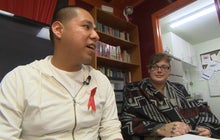
Uriel Loman, left, works part-time as an HIV-prevention educator.
CBS News
His story is an example of why a strong push is underway among health care officials including the Centers for Disease Control and some public health departments to increase awareness about the once-a-day pill that can prevent HIV infection for people at very high risk of becoming infected.
If taken as directed, PrEP, which stands for pre-exposure prophylaxis, can be more than 90 percent effective at keeping an HIV-negative person from becoming infected. It is sold under the brand name Truvada and is a combination of two HIV medicines in one pill.
The Food and Drug Administration approved Truvada in 2012 as the first drug to reduce the risk of HIV infection, but a 2015 CDC survey found many health care providers still haven't heard of it.
"One out of every 3 primary care providers and nurses are not aware about PrEP," Dr. David Rosenthal told CBS News. Rosenthal is the medical director at the Center for Young Adult, Adolescent and Pediatric HIV at Northwell Health on Long Island, New York.
Rosenthal has been working to get the word out to his patients and other providers about the benefits of PrEP. He's especially concerned about teens and young adults like Loman, who is in an age bracket that's seen a spike in infections, even as overall HIV rates have dropped. The CDC found 13-to-24-year-olds accounted for 26 percent of all new HIV infections in the United States in 2010, the most recent data available.
"I think we can bring the new cases of HIV down so dramatically if everyone that needs to be on PrEP gets on PrEP," Rosenthal said.
Loman says if he had known PrEP were an option, it could have changed everything for him. Now 25 years old, he works part-time as an advocate at Pride for Youth, an LGBTQ services center in Bellmore, New York.
"I want to see the change, the change in my generation," Loman said.
He, too, is focused on educating young people about PrEP. He uses social media to target other young people. He's hoping his story will motivate other young people to stay safe and healthy.
Pride for Youth's director, Pete Carney, says the center puts a strong emphasis on helping young gay and bisexual men of color, who bear a disproportionate burden of HIV. The CDC found infections among them increased 20 percent from 2008 to 2010.
"PrEP in my experience, PrEP is a game changer," Carney said. "It's one of the tools we have to end the epidemic."
Tuesday, September 22, 2015
8:42 PM
Unknown
ចំណង់ គឺជាប្រភពនៃការចង់ និង ចំណង់ចំណូលចិត្ត សេចក្តីស្រលាញ់ ឬជាការចូលចិត្តនូវវត្ថុដែលជាទីស្រឡាញ់ ឬភាពប្រសើរ។
ចំណង់មានភាពខុសៗគ្នាពីមនុស្សម្នាក់ទៅមនុស្សម្នាក់ទៀត ហើយចំណង់របស់មនុស្សម្នាក់ៗតែងតែមិនមានភាពស្កប់ស្កាល់ លោភលន់ ចំណង់ចង់បានមិនចេះអស់មិនចេះគ្រប់ ដូច្នេះហើយទើបមនុស្សគ្រប់រូបត្រូវតែធ្វើការគ្រប់គ្រងនូវភាពលោភលន់ របស់ខ្លួន។
បើសិនជាមនុស្សយើងបណ្តោយខ្លួនឯងឱ្យលោភលន់កាន់តែខ្ពស់ នោះមនុស្សទាំងនោះនឹងអាចមានបញ្ហាគ្រោះថ្នាក់ដល់ជិវិត រឺឯចំណង់ផ្លូវភេទក៏ដូចគ្នាផងដែរ ដូច្នោះទើបនៅក្នុងអត្ថបទរបស់យើងនឹងបង្ហាញដល់មិត្តយុវវ័យពី ចំណង់ផ្លូវភេទ និង ការគ្រប់គ្រង។
ចំណង់ផ្លូវភេទ គឺ ជាបំណងប្រាថ្នាសម្រាប់សកម្មភាពផ្លូវភេទ ហើយចំណង់ផ្លូវភេទត្រូវបានកំណត់ដោយ កត្តាជិវសាស្ត្រផ្លូវចិត្ត និង សង្គម។ មនុស្សមានចំណង់ផ្លូវភេទតាមរបៀបជាច្រើន (ការចង់បានការបង្ហាញផ្លូវភេទ ឬ អារម្មណ៏ទាក់ទាញផ្លូវភេទ) ហើយការមានចំណង់ផ្លូវភេទមិនមែនមានតែវិធីមួយ “ធម្មតា” នោះឡើយ។ ម្យ៉ាងទៀតមនុស្សសឹងតែគ្រប់រូបសុទ្ធតែមានចំណង់ផ្លូវភេទ ជួនកាលមានចរិតតឹងតែងថែមទៀតផង មនុស្សអាចមានចំណង់ចំពោះមនុស្សម្នាក់ទៀត (ដែលមានភេទដូចគ្នា ភេទផ្សេងគ្នា ឬភេទទាំងពីរ) ហើយពួកគេក៏អាចនឹងមានចំណង់ទូរទៅដែលមិនចាំបាច់មានមនុស្សផ្សេងទៀត។ បន្ថែមពីលើនេះកម្រិតចំណង់ផ្លូវភេទរបស់មនុស្សអាចផ្លាស់ប្តូរក្នុងរយៈពេលដ៏ខ្លី ឬក្នុងដំណើរជីវិតរបស់គេ ។ គេអាចមានចំណង់ផ្លូវភេទរហូតដល់ចុងបញ្ចប់នៃជីវិត បើទោះបីជាការឆ្លើយតបខាងរាងកាយរបស់គេមានការផ្លាស់ប្តូរទៅតាមអាយុក៏ដោយ។
ជាញឹកញាប់មនុស្សមានការយល់ច្រឡំចំណង់ផ្លូវភេទ ឬការទាក់ទាញផ្លូវភេទទៅនឹងបទពីសោធន៏ផ្នែកមនោសញ្ចេតនា ឬរាងកាយផ្សេងទៀត ។ សម្រាប់មនុស្សជាច្រើនអារម្មណ៏ស្រមើស្រមៃអាចបង្កើត ឬបង្កើនចំណង់ផ្លូវភេទបាន ហើយការគិតដល់សកម្មភាពរួមភេទជារឿងធម្មតា មិនមែនជារឿងគួរខ្មាសអៀនឡើយ និងការប្រើអារម្មណ៏ស្រមើស្រម៉ៃដល់សកម្មភាពរួមភេទមិនមែនមានន័យថា ចង់ប្រព្រឹត្តសកម្មភាពនោះឡើយ។ វាមិនមែនមានន័យថា បុគ្គលដែលមានអារម្មណ៏ស្រមើស្រម៉ៃ ដល់ការរួមភេទនឹងមានការប្រព្រឹត្តតាមការស្រមើស្រម៉ៃរបស់ខ្លួននោះឡើយ។
មានកត្តាមួយចំនួនដូចជា កត្តាសង្គម សញ្ចេតនា និងរូបរាង្គកាយ បានជួយកំណត់ចំណង់របស់មនុស្សក្នុងការបង្ហាញពីអារម្មណ៏ផ្លូវភេទ ហើយជារឿយៗ កត្តាទាំងនេះវាមានទំនាក់ទំនងគ្នា។
ដូច្នេះហើយត្រូវតែធ្វើការគ្រប់គ្រងកុំឱ្យមានបញ្ហា ដូចជាកត្តាសង្គមបានអូសទាញមនុស្សជាពិសេសទៅលើយុវវ័យឱ្យប្រើប្រាស់ នូវគ្រឿងញៀន គ្រឿងស្រវឹងដែលអាចធ្វើឱ្យគេបាត់បង់ស្មារតីនឹង ប្រព្រឹត្តនូវអំពើរមិនត្រឹមត្រូវបាន។
បើទោះបីជាសិទ្ធផ្លូវភេទ ចំណង់ផ្លូវភេទ មិនត្រូវបានគេហាមឃាត់ដល់បុគ្គលម្នាក់ៗក៏ដោយ តែបុគ្គលគ្រប់រូបជាពិសេស យុវវ័យ ដែលជាទំពាំងស្នងឬស្សីគួរគប្បីត្រូវតែចេះគ្រប់គ្រងនូវអារម្មណ៏ ផ្លូវភេទរបស់ខ្លួន ដែលជំនួសដោយ ការលេងកីឡា អានសៀវភៅ ឬសម្រេចបំណងដោយខ្លួនឯង (សេពកាមដោយដៃ) ។ល។ តែចំពោះយុវវ័យដែលមានដៃគូរហើយមានសកម្មភាពផ្លូវភេទ ត្រូវប្រើប្រាស់ មធ្យោបាយពន្យារកំណើតដូចជាស្រោមអនាម័យបុរស ថ្នាំគ្រាប់ពន្យារកំណើតឱ្យបានត្រឹមត្រូវ ដែលអាចរកបាននៅមណ្ឌលសុខភាព។
Subscribe to:
Comments (Atom)
RSS Feed
Twitter